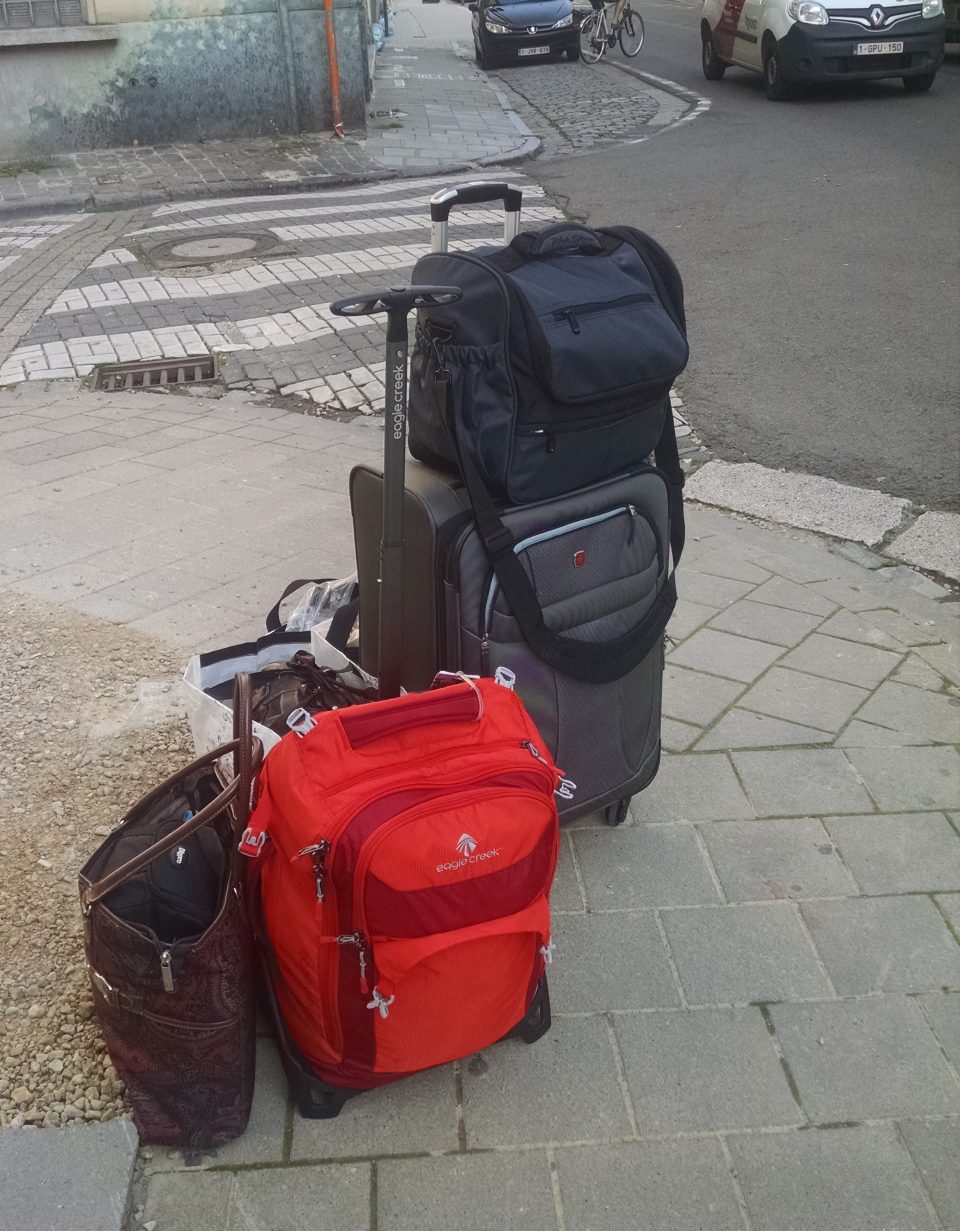
We left Belfast on board the Stena ferry bound across the Irish Sea to Scotland. Ferry travel, on calm days, has become my favorite form of public transportation. There’s plenty of room to move about and your luggage is checked (without charge) when you board. The two hour crossing was pleasant enough going from sunny to cloudy by the time we arrived in Scotland. From there we took a coach to Ayr, a small resort city sitting at the the River Ay spot where it flows into the Irish Sea on the west coast of the country. 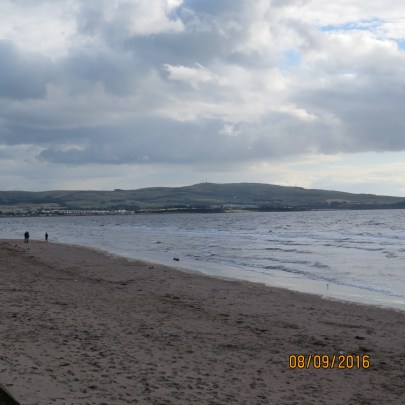 Unfortunately it was cold and windy in Ayr and by the time we arrived at our Bed and Breakfast the rain had begun and the beach didn’t seem very appealing. Nevertheless, we took a walk to the ocean front and found a small wonderful local restaurant for dinner.
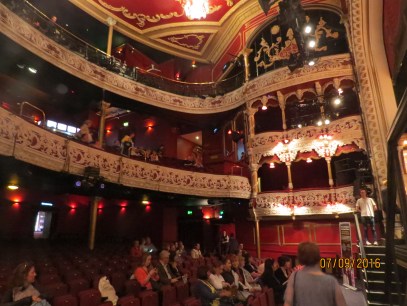
The Bed and Breakfast, which would be our home for the next two nights had a comfortable large living room with a bar in the corner. We enjoyed chatting with a group of four men from England who were staying there while they were working in Ayr replacing seating a local theatre. The owner was an interesting lady who said she always wanted to own a B&B so after her sons grew up and left home she bought the Arrandale Hotel . She seemed to be a one-person show checking guests in, doing the cooking and in charge of the cleaning as well. The weather was cold enough that we didn’t hesitate when we headed upstairs to bed but hurried into our pajamas and jumped beneath the covers to get warm. And this is August. Wow! What must their winters be like! We do wonder how often it is that folks get to use the Ayr beach for sunbathing!
Alloway is just two miles south of Ayr and was the home of Robert Burns. So off we went in the morning to the Robert Burns Home and Museum. We walked a short distance to the bus stop and must have looked unsure of ourselves because a gentleman who is a curator at the museum asked if he could help us and showed us which bus to take and also where to get off! The home is a modest place that dates from the early 1760s.


We walked from the home to the museum and past the bridge, Brigadoon, that was mentioned in the final verse of his poem, Tam o’ Shanter. When we entered the museum there was a group of young girls performing Scottish dances. Interestingly they were from Canada and on tour.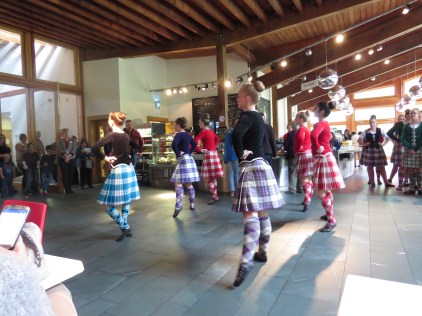 In the museum itself we learned a lot about Burns and his personal life (He was quite the ladies man!) and how he had great influence on many American writers including: John Steinbeck, James Whitcomb Riley and JD Salinger. In the light rain we continued on to the Burns statue and then the churchyard where his parents are buried. Even though the day was cold and rainy it sort of fit with what we expected of Burns’ Scotland. Imagine our surprise when as we waited for a return bus, the gentleman who had given us directions in the morning was at the same bus stop for the trip back. He explained that he had been to the Scotland Cricket Match. We told him that we didn’t know much about cricket but it was the scoring we found particularly difficult to figure out. He told us that sometimes cricket matches can go on for three or even four days. That was enough to convince me that perhaps I didn’t need to understand any more about the sport!
The next morning we boarded a Scotrail train for Inverness in the Highlands of northern Scotland. The check in with our Airbnb was a bit unusual because no one met us or even connected with us but once we figured out the key and let ourselves in we found the apartment to be very comfortable and in a great location. We felt a bit silly when we asked our taxi driver the name of the river next to us and he responded, “The Ness.” Ah yes, the town was Inverness. Made sense! We had been warned that northern Scotland in general, and Inverness in particular would be cold. But again we got lucky with the weather and while we had some rain, generally our weather was in the high 60s to low 70s, very comfortable indeed. We had learned by this time that whenever we ventured out to put our rain hats and umbrellas in my day pack just as a matter of habit. Inverness is a lovely city with just less than 50,000 residents.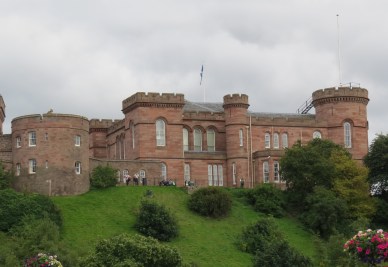 Inverness Castle is a red sandstone structure that is perched over the city. Although this castle was built in 1836 it is situated on the site of an 11th century defensive structure where Macbeth supposedly killed Mael Colium III’s father.There’s also an interesting local museum that helped us better understand Scottish history. But most of all Bob and I enjoyed walks along the river.


We decided that since our daughter Cary and our son Patrick are going to meet up with us next week in Edinburgh that we would wait to make the trip to Loch Ness with them. In the meantime, Bob checked out other coach trips and suggested the trip to the Isle of Skye. The coach trips we’ve taken since we arrived in Ireland are usually very reasonably priced and the drivers and/or guides are very knowledgeable and provide an interesting and enjoyable day. We walked to the bus stop in Inverness, about 15 minutes from our apartment. Once again we were lucky with predominately sunny skies. For eight pounds each we were provided with sack meals for lunch and supper. The twelve hour tour took us from Inverness, the capital of the Highlands, across the northern section of Scotland through glens and over mountains to the Isle of Skye. The heather I’ve read so much about in Scottish novels was particularly pretty.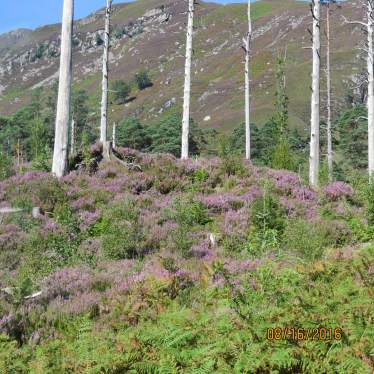
And then there’s the ubiquitous sheep… The guide explained that it is imperative that sheep are sheared as the wool becomes very heavy. And if the sheep aren’t sheared they’ll die because they can no longer get up.


But because the sheep were absolutely everywhere we looked, we wondered how the farmer ever rounds up his flock.
One of my favorite stops was Kilt Rock named because of its likeness to a kilt and features a waterfall of more than 180 feet.


Standing also at the site was a bagpiper. The music seemed so appropriate in this setting. We also passed a school ferry on the Isle of Skye. Imagine what it must be like to travel for several hours via ferry to school. 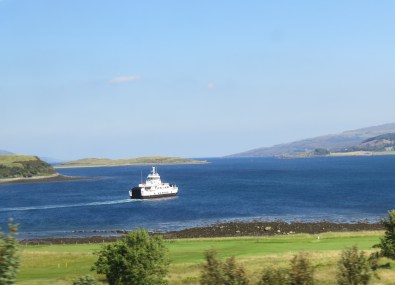 Some students, we were told, stay the week in order to not have to endure daily treks. I’m sure it saves a great deal of money as well. From Skye we could see the Outer Hebrides. One of these islands is Harris Island which is where Harris Tweed originates. We passed brochs (prehistoric Scottish hollowed wall structures) and medieval forts and castles. We learned about the bloody battles of the clans. We even traveled down a single track road to the Faerie Glen, but because the faeries shy away from the sun they stayed hidden from us. We visited Portree a busy fishing port with multi-colored houses.


Everywhere we turned there was a loch or mountain view more beautiful than the last.


When we arrived back in Inverness we stopped at a local bar on the way home for a beer and some Scottish music.
The next day it was time to leave northern Scotland and head down to Edinburgh. It would be less than a four hour journey and we looked forward to seeing more of the Scottish countryside.


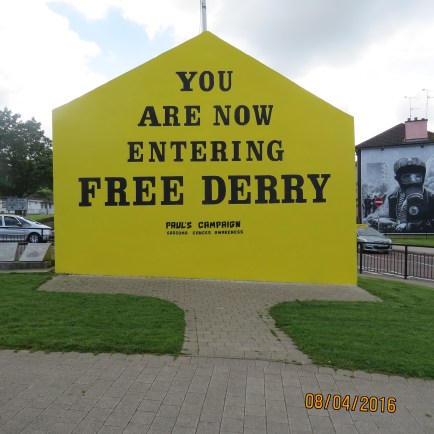 The murals that follow had an emotional impact that is hard to describe. They’re beautiful and very moving. They speak for themselves.


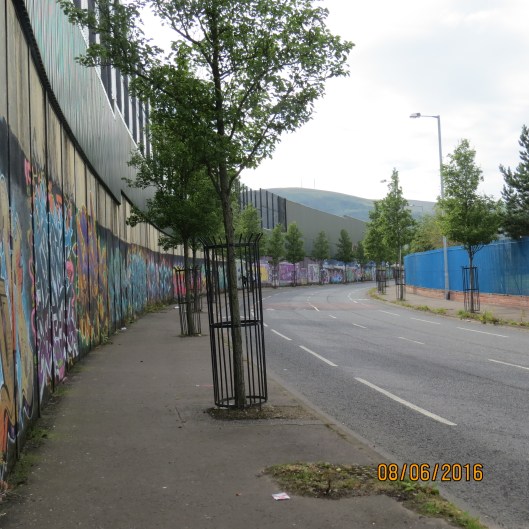 Joe explained that although the violence has pretty much ended the wall provides safety for both sides.And rather than separate the two sides it allows them to live together. There’s graffiti along much of the wall and we could see how the wall had been heightened several times. Joe said it was because each time it was extended, people could still find a way to throw things over the top. In one place we saw how screening had been added to the back of houses that bordered the wall to add further protection.
 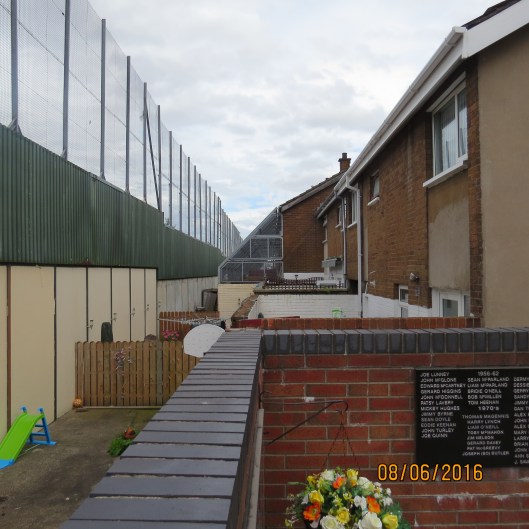 He went on to explain while driving through the Protestant neighborhood that if he weren’t driving the taxi he wouldn’t feel safe being there. He told us he lives in an integrated neighborhood and that has made all the difference for his kids. In the city he added they can go to pubs with their friends, Catholic and Protestant alike. He explained that the integrated schools have made a huge difference. And that he was surprised when his kids told him that their Protestant classmates like rugby, which is traditionally a Catholic game while futbol (soccer) is traditionally a Protestant game. Putting kids together seems to be the best way of ending prejudice of any kind. Where to build the schools was a major decision since Catholic parents didn’t want their kids to go to school in the Protestant neighborhood and vice versa so the schools were placed in integrated neighborhoods. I’m not sure this was ever a consideration in the US when in 1955 separate but equal was determined to be unconstitutional. There were murals with a loyalist (mostly Protestant) slant to them. The Ulster Defence Association (UFFDA) was one in particular. The UFFDA was a loyalist vigilante group whose goal was to defend Ulster Protestant loyalist areas. They were responsible for 400 deaths, mostly Catholics killed at random in retaliation for IRA attacks.
 Some signs and murals reflected the nationalist (mostly Catholic) point of view.


 The nationalists said that while it was never their intention to destroy the hotel, it showed the government they could if they wanted to. Before our tour with Joe we had no idea that the tension was still so great. As our tour drew to a close Joe told us about a march that was going to occur the next day.
 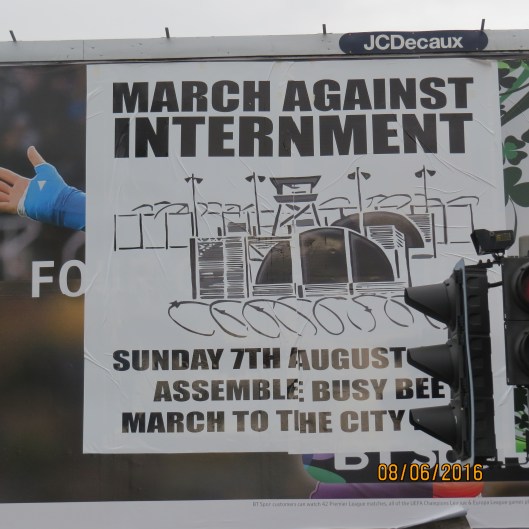 The nationalists had petitioned to march to the courthouse protesting the continued internment of political prisoners without charges. For whatever reason the request had been denied and the group had been told to terminate the march several blocks short of the destination. (Yet just a few weeks earlier, on July 12, the Orangemen had been allowed to hold their annual march to City Hall.) So the next morning Bob and I trekked down the street just a few blocks from our hotel. When we arrived in late morning we saw a few police cars. These were no ordinary police cars; these were armored Land Rovers. Over the next hour and a half more and more of these vehicles continued to appear, many of the police attired in riot gear.


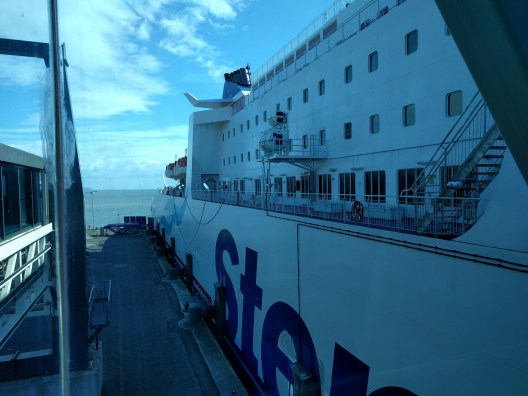 Cairnryan, Scotland and once again lucked out with the weather. It was another nice day and the sea was calm. Upon arriving in Scotland we boarded a coach for Ayr. This we had read was a Scottish west coast resort city.
 The owner met us there, which I especially like because she provides us with details about how things work and we also get a chance to ask questions. One of the best parts of the Galway apartment was that it had a piano! I hadn’t played one since we left Big Rapids in early January! Off we went in search of a music store to get a piano book. While there we found Irish whistles and I realized this was a must have for our oldest granddaughter!


 a barren landscape where the hills are made of carboniferous limestone. While the focal point of the tour was the Cliffs we stopped at several places along the way including Dunguaire Castle, once home to a sixteenth century king. We also stopped at Gleninsheen Wedge Tomb, which dates back to 2500 BC and just further down the road, we came to Poulnabrone Bolmen which was built about 5800 years ago making it older than the Pyramids and far earlier than Stonehenge that had fascinated us just a few weeks earlier. We also stopped at Kilfenora Cathedral with its many Celtic Crosses. Kilfenora was a sixth century monastery .


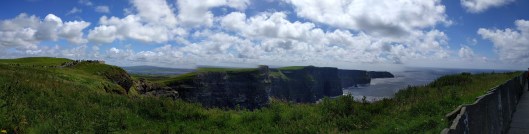 We were incredibly lucky to have a sunny day for our trip. We felt as though we could see forever! We returned to Galway via The Wild Way of the Atlantic with its narrow winding road along the sea.
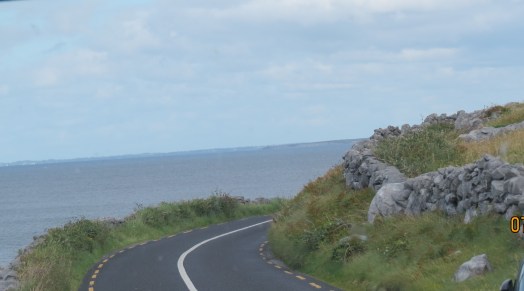 At one point the driver told us he was going to quit talking so he could concentrate on the road. Great idea!


 They grow wild among the hedgerow. I always thought my fuchsias in their pots were lovely but in the UK and Ireland they’re bushes! So spectacular! Obviously the climate has its advantages.
 The music and dance were wonderful! It was an extremely warm day and one of the performers explained that this was the warmest day in 400 years. Obviously, sunny warm days are a rarity in Ireland.


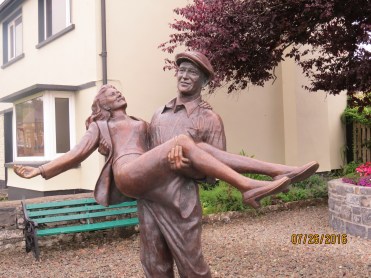 Several people had mentioned this to us in the past few weeks. It was fun to see the statue of John Wayne and Maureen O’Hara as well as the pub that is also in the movie. One evening a few nights later we decided to watch the movie via our computer, Amazon Prime and Chromecast. The scenery was beautiful and we enjoyed seeing places we had just visited, but the movie itself? Oh my! Did all movies in the early 50’s lack a plot?




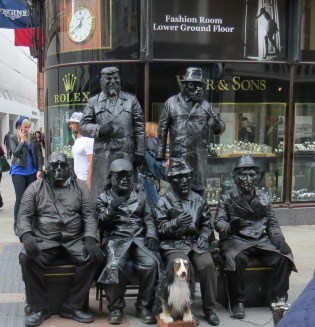
 of Molly Malone. The Molly Malone, from the ballad, “In Dublin’s fair city, where the girls are so pretty, I first set my eyes on Molly Malone…” Again she’s more legend than truth but that too is part of the culture!




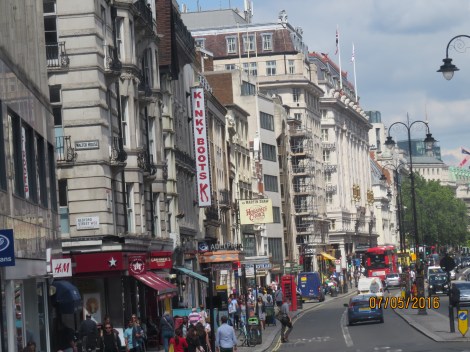


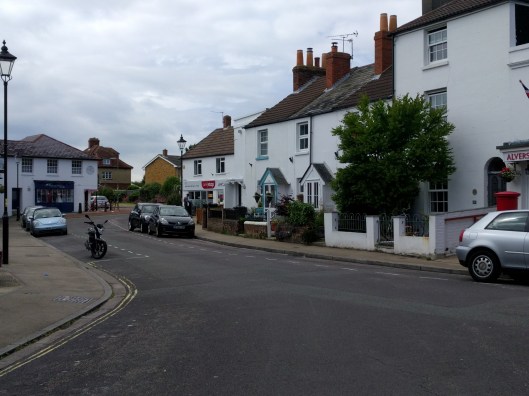


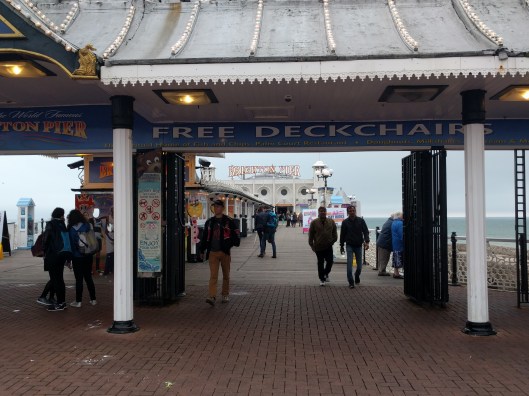 We also visited the D Day Museum in Portsmouth.


 In the museum we saw the Curse Tablets that were scratched in metal and written to Minerva. These tablets were, as the name suggests, curses people wrote about injustices that had been done to them. The writer named the name of the person who had committed the wrong, as well as the injustice they had perpetrated. I found it particularly interesting that if a person didn’t know who had wronged them, or was unsure, they could create a list of suspects! There is a suggestion that Bath may have been the site where King Arthur (back in about 500 AD) defeated the Anglo-Saxons. This is something I can not begin to comprehend! When I think of the Anglo-Saxons I think of Beowulf and English literature…not a location I can actually visit.


 From there we had made reservations on the Stonehenge tour bus to make the last half hour drive. Because we were visiting in the summer, the website strongly suggested that we get tickets in advance for a specific time to enter. By calculating how long the trip would take us in total we figured noon would be a good entry time. And it turned out to be perfect! We were dropped at the Visitor Center from where we got a shuttle to the actual site. Even with all the pictures I had seen, the first glimpse took my breath away.
 It’s definitely one of the world’s greatest antiquities dating from 3000 – 2000 BC. Because of millions of tourists who visit the site each year, the stones are fenced off so you can’t actually touch them. This also protects any archaeological treasures that may still remain beneath the stones. And it’s been done in such a way that it doesn’t limit the visitors view. While its origins are not exactly known, it has been discounted that Stonehenge was a Druid construct, dating much earlier than that. The best scientific thought of today is that it was created as an ancient people’s memorial, part burial site and part worship site. Since we’ve been in England a research document has been published saying that the stones were moved from Wales. The stones were cut and the literature points out that tongue and groove techniques were used in their construction. The whole idea is difficult to comprehend, but to think that people moved these colossal stones to a distant location is overwhelming. After leaving Stonehenge we stopped in Salisbury for lunch, (during which time it began to pour!) and then visited the 13th century Chapter House of the Salisbury Cathedral in order to view one of the four remaining copies of the Magna Carta. It was written in Medieval Latin so we’ll just have to take historians’ word about what it says!


 Caesar Manrique was a local resident/architect who is largely responsible for developing tourism on the island and it truly is a model for the world. His influence is based on his love for the island and his desire to share it with others while maintaining as little impact on the environment as possible. His home is built on the site of the volcanic eruptions of the 18th century and volcanic bubbles below ground have been made into different rooms of the home. His artwork is ubiquitous throughout the island.


 Talk about efficient use of energy! In the late 1400s camels were brought from Africa and today there are still caravans that tourists can ride in the Timanfaya National Park.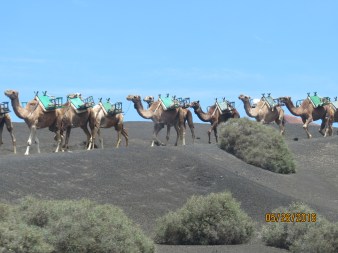
 On the way back from the volcano we passed a salt pan. At one time in the 1940’s Lanzarote had more than 20 salinas on the island but today there are still three that produce salt. Many local recipes including Canarian potatoes call for salt crusts.

 There is aloe cream, aloe lip balm, aloe bath crystals, aloe for burns, aloe drink for digestive issues. There doesn’t seem to be any ailment it doesn’t cure. (We did find however, that the aloe cream made mosquito bites disappear almost instantaneously!) We also enjoyed the local venders who sell their products of jewelry made from volcano rock and olivine, a lovely green gemstone found in some of the volcanic rock. We also liked the homemade jams and jellies as well as wine. And of real interest to us was the huge bag of saffron that sold for two euros! The real stuff? Who knows? We also visited an art museum housed inside a castle! Very unusual, very interesting.

 (one of many on the island) with plenty of restaurants. Again, we found friendly folks everywhere we went. Our favorite restaurant, Kristian’s,


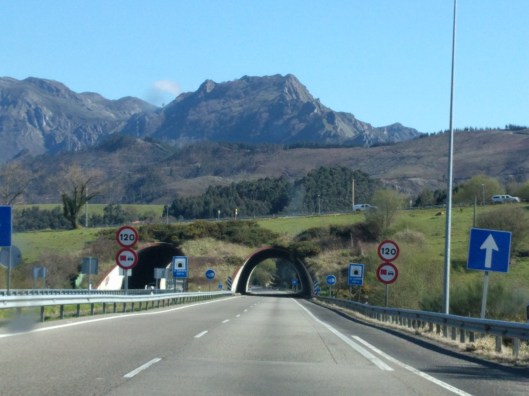
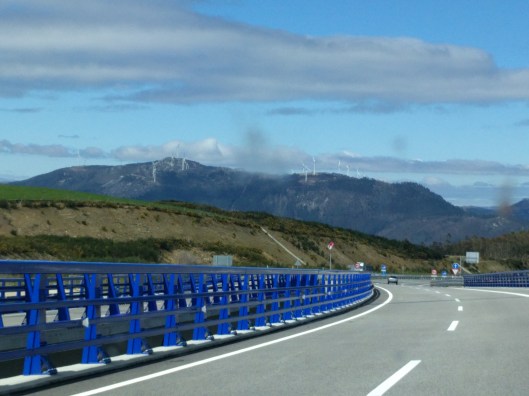
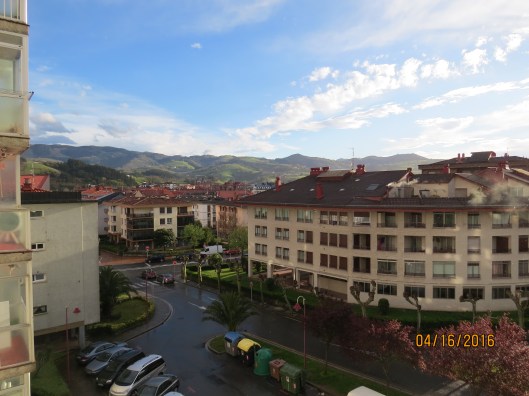
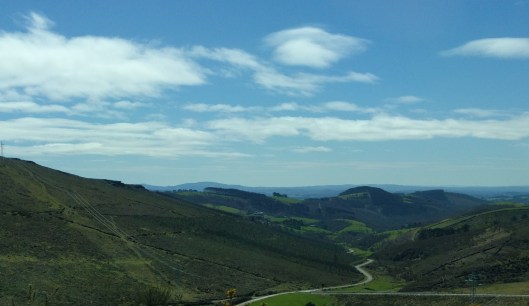 Basque country extends across northern Spain and southern France and many consider themselves Basque not Spanish or French.
 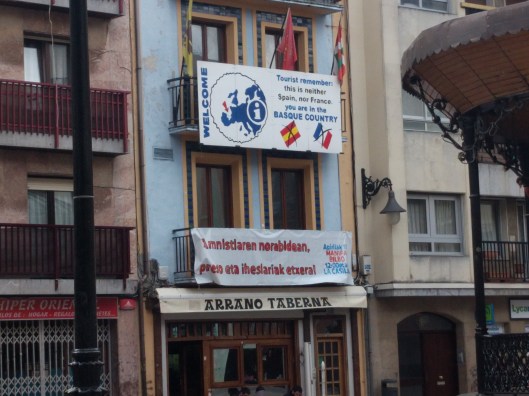 We didn’t realize before we came here that the Basques not only have their own culture but their own language as well. During Franco’s time in power the Basque language was not taught so generally people growing up between 1939 and the late 1970s know little Basque. But in the 1980s it had a resurgence. It’s a very difficult language with lots of tx’s and k’s and z’s. We have found little English spoken here but because the people are so very friendly and everyone speaks Spanish and my Spanish is improving with daily practice, we have been able to get along reasonably well.
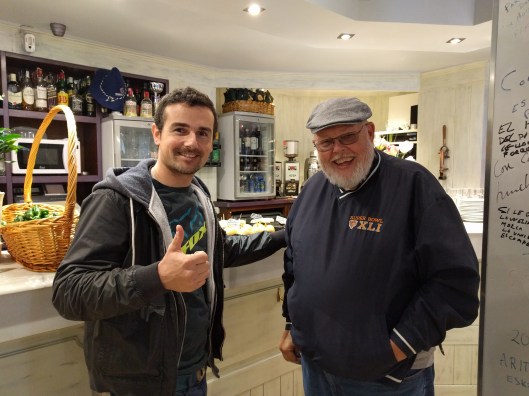 Daniel is a surfer and explained to us the week before we arrived there were European surfing championships here. After showing us around the apartment, he drove with us into town pointing out a major supermarket (very Meijer-like for you Michiganders!) and also took us to a nearby taberna introducing us to the local specialty, Txokoli (pronounced choc o lee). It’s a dry sparkling wine that is poured from quite a height in order to enhance the fizziness of the drink.
 It’s really difficult for us to get used to the late dining hour of the Spanish. 8:30 is just too late for us to eat but they do have amazing tapas, called pintxos in Basque, that are very tasty and served for lunch until about 6 pm and very reasonable as well. A pintxo usually sells for between 1 euro and 1,65 (about $1.15 to $2)!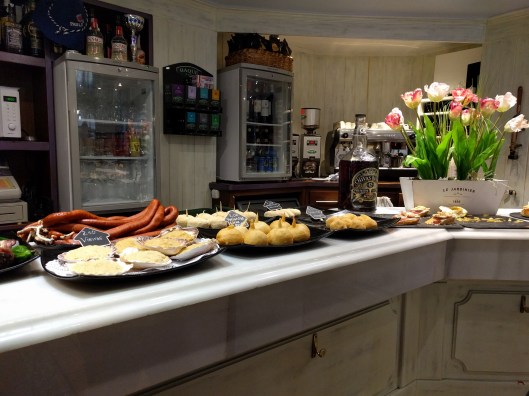


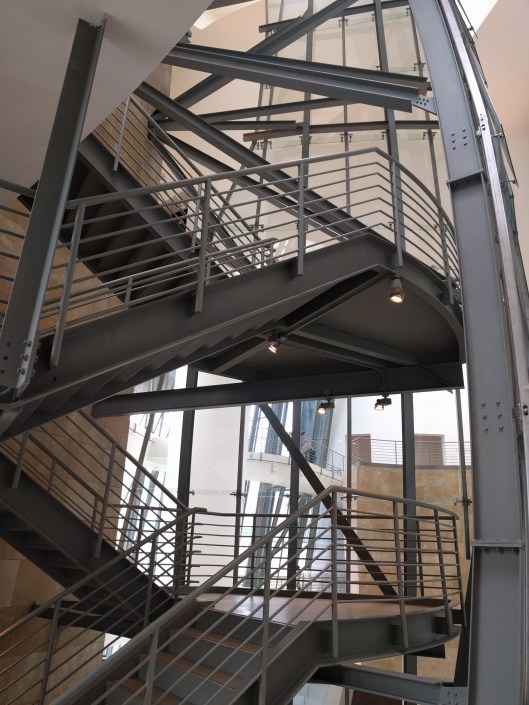

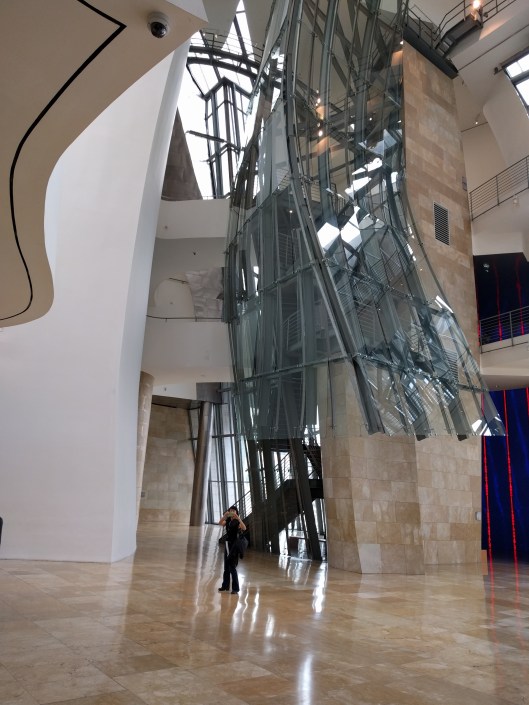 The architecture of the museum itself is as spectacular as the works it contains!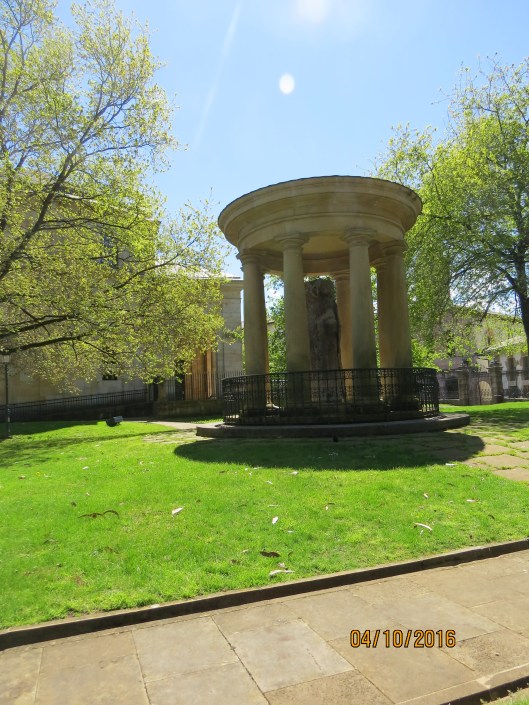
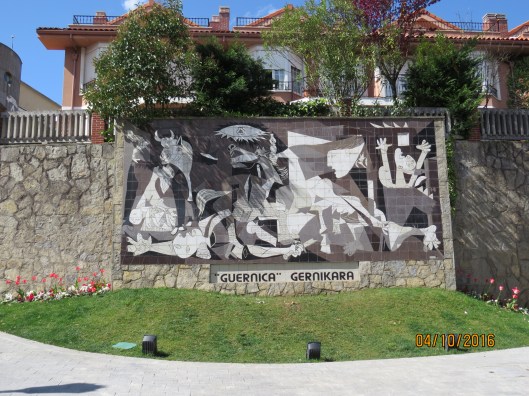
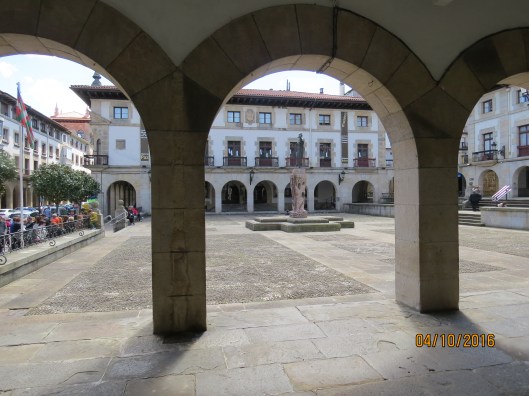
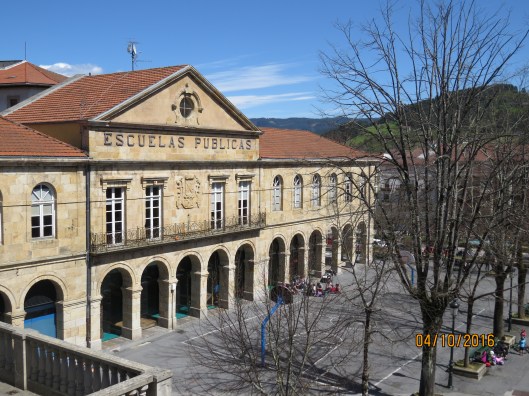

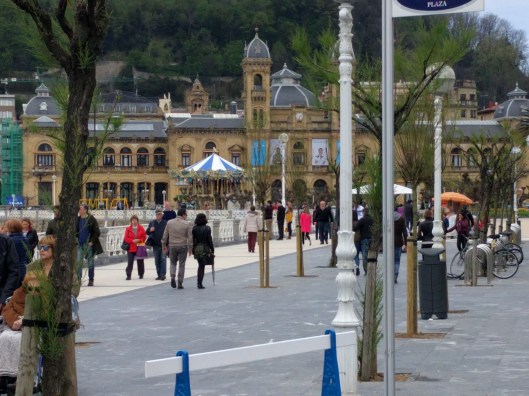
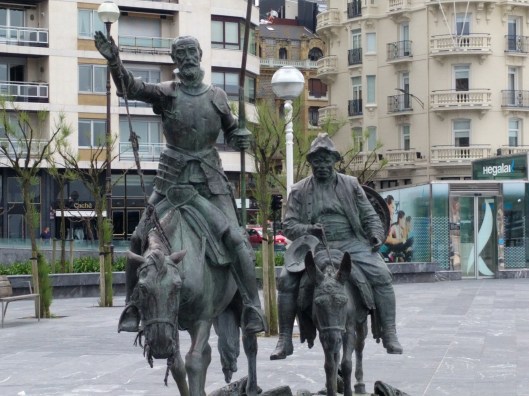


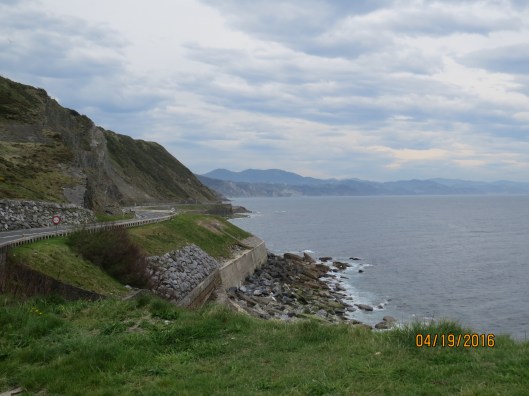
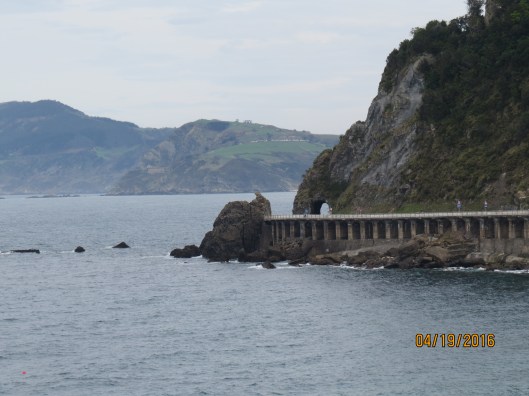


 Because we had reservations for our Airbnb in the Algarve the next night we took the direct route across Spain staying on the autopista most of the time. We spent the night in Salamanca, a city of nearly 150,000, and it turned out to be a great choice. It is a city that was founded in the 1100’s by the Carthaginians and was the intellectual center of Spain in the 1500’s and 1600’s. It is home to one of the oldest and finest universities in Europe. Our hotel was just a 5 minute walk to the historic center, the Plaza Mayor.

 Sidewalks and a footbridge take us from our apartment to the town which has a large marina and a main street that follows the harbor to the Atlantic.
 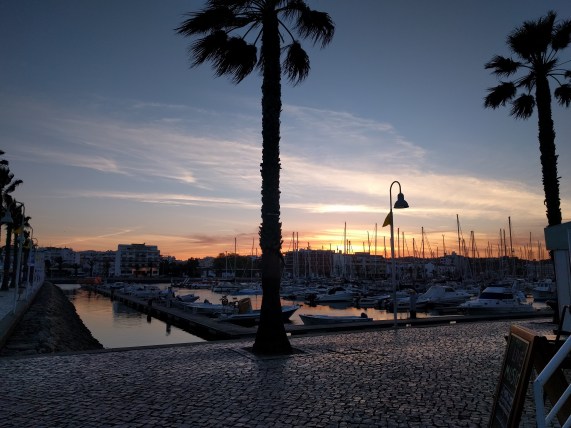 Along the harbor walk are shops that sell a variety of local items especially those made from cork. Cork trees are an important resource of Portugal and since much of the world has moved to using synthetic corks in their wine bottles, Portugal has felt the impact! Purses, jewelry, even clothing made of cork is for sale throughout the area! Our favorite part of the Algarve is the spectacular beauty. The rugged cliffs jut out into the sea and with each turn the view is more beautiful than the last!


 Walking through the old city center we found an English used bookstore and met a delightful Brit, Christine Woodrupp, who was running it temporarily for her daughter. We had a lovely conversation about the area and she gave us a lot of tips about what we should see. And in addition we each found books to add to our must reads!
 The old town is particularly interesting because while there are lots of tourists there are also lots of locals. I chuckled as we saw a woman, who obviously was getting her hair frosted, running back into the hair salon after touring shops in the area with her hair wrapped in foil. Local or tourist? I’m not sure! Many Brits, we found, come here on holiday and then decide to stay. From what I hear about the weather in the UK it seems like a sound decision. (We’ll find out when we visit there in June, July and August!)




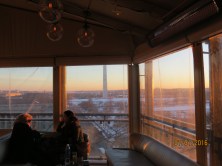 I’ll never get used to how alive American history becomes as I look at the streets and buildings and realize all the people from history who have walked those streets. And as if a reminder to this point, as we left the W Hotel walking toward Lafayette Park, we passed former Senator Lugar from Indiana. The White House is beautiful during the day, but to me it’s even more awe-inspiring at night. I could feel the pride of being an American swell up inside me as the White House came into view with all the lights focused on its grandeur, lights which seemed to block out everything else.
 The right to free speech was never more evident than listening and watching as a demonstrator in front of the White House shouted the most disgusting obscenities while waving the American flag. We continued on and had a late supper at Ben’s Chili Bowl, a DC institution that’s been in existence since 1958, the year that President Eisenhower ordered federal troops to integrate the Little Rock Arkansas schools. This is the area of the riots of 1968 following Martin Luther King Jr’s assassination; where Stokley Carmichael asked for special permission for Ben’s to stay open to feed activists and firefighters. Ben’s remained through the devastating decline of the neighborhood that followed because it was the local gathering area for so many. Ben’s Chili Bowl is like visiting a history book! We were there about 11 pm and the place was hopping with folks of all ages.


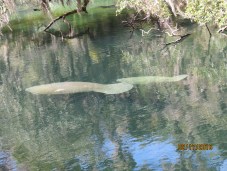 We also drove to Flagler Beach just south of St. Augustine hoping to see right whales (called that because whalers thought they were the right ones to catch!) but no luck. Wherever we travel we are fascinated by the different birds we see and also find that visiting local zoos provide us with insights into local flora and fauna.


 I associate South Carolina with the Civil War and was surprised to find so many monuments to Revolutionary War Heroes. The north south streets of the city are even named for officers who fought in the Revolutionary War. We also found it interesting that there are six gold stars on the statehouse marking the spots that were hit by Sherman’s cannons. And of course, we had to search for them. There’s also a cement cannon base from the Spanish American War from which the cannon was removed during World War II to use for scrap iron.


 You reserve a place online assuring that when you arrive, there will indeed be a place to park and the cost for the whole day was $17. I was impressed! We got there at 11:30, had a great lunch with the boys and then trekked down to the Washington Monument. In an attempt to eliminate long lines, the US National Park Service now allocates tickets online. (You can also take your chances and get them at the office at the monuments but that was a risk we didn’t want to take in early March.) There is no charge for the tickets and it was really nice to just show up at the appointed time and be escorted into the elevator to the top.

 Bob and Jane's Excellent Adventure