

This Mothers Day my mom would be 118. I wish I could sit down and have a conversation with her! Lately I’ve recalled over and over a story she told me about a Christmas when she was a teenager and her parents told her and her siblings there wouldn’t be any gifts because they were quarantined. How amazed she was on Christmas morning when there were small gifts for everyone including oranges in the bottom of their stockings. This became a tradition she continued with my sister and me and one that Bob and I continued with our four kids. Mom said she never did figure out where the gifts came from! That was the Christmas of 1918, during the flu pandemic.
My mom grew up on a farm in Daviess County, in southern Indiana, near the small town of Elnora. One hundred years ago this month, she graduated from Epsom High School. One hundred years ago!
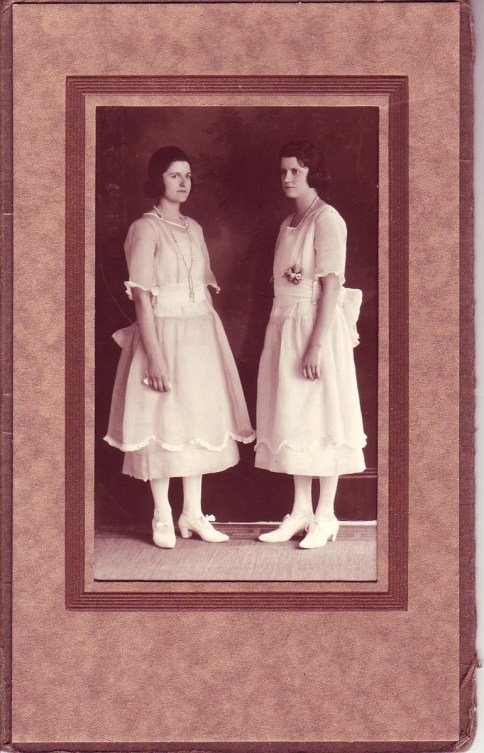
Mom and her sister Mabel (two years younger) and the dresses they made. Mom wore hers for high school graduation in 1920. (Check out those shoes!)
Women didn’t even get the right to vote until 3 months after she graduated! I remember Mom telling me on more than one occasion how from the time she was in kindergarten she wanted to be a teacher. I never got the idea she felt poor, but there certainly wasn’t a lot of extra money. So it was after a lot of pleading, her mother gave her $3.00, the total amount of her cookie jar savings, so Mom could enroll at Indiana State Normal School in Terre Haute. (Today this is Indiana State University.) They had a hired hand who took Mom up to Terre Haute and although it was only about 60 miles from home, it was an all day journey. In Terre Haute she rented a room over a peanut butter factory. She pretty much lived on peanut butter sandwiches during her time at school.
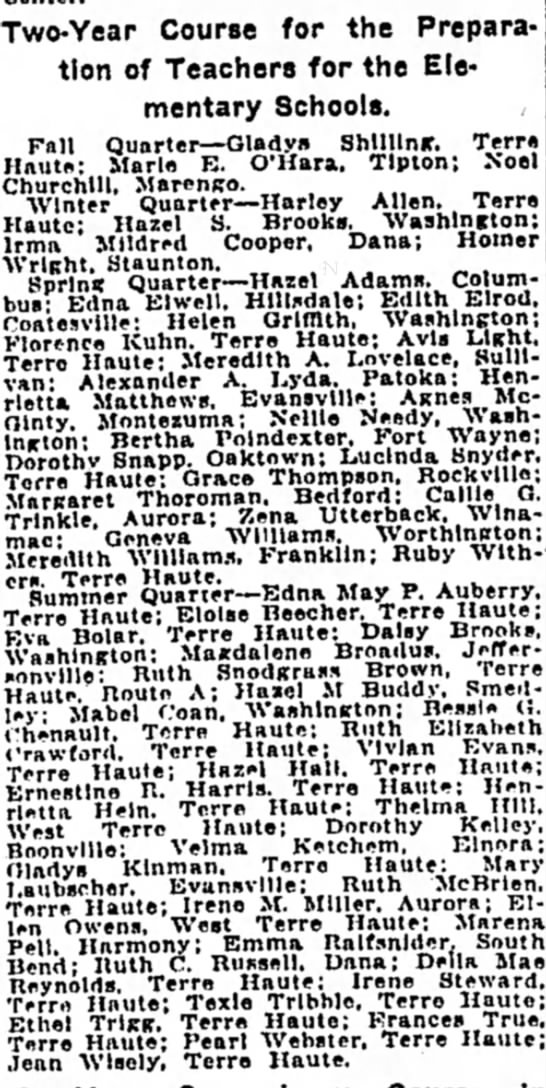
Clipping from the Indianapolis Star, June 17, 1922
In 1922 she graduated with her elementary teaching certificate. Mom’s first teaching contract stated in a very straightforward way that female teachers could not bob their hair nor be seen out after a certain hour in the company of men unless a chaperone accompanied them. And most specifically women had to quit teaching when they got married. When Mom announced that she was getting married, Mylo Murray, the superintendent of the Michigan City Schools, reminded Mom that she would have to resign. My mother disagreed and fought it all the way to Indianapolis where much to the surprise of many, she won! A few weeks later, Mom submitted her resignation. It wasn’t that she wanted to continue teaching after she got married, she explained, it was just that she should have the choice, the decision should be hers to make. And although Mom substituted after I started school, she didn’t return to teaching full time until I was in the fourth grade. Education remained really important to both her and my dad. My sister and I both grew up knowing that going to college was a given. It wasn’t a question of “If we would go” but rather, “Where would we go?”
I also remember mom telling me that I should marry only if I found the right man. Men rarely make marriage a goal. Neither should women! (I can remember Dad saying it was important to get my college degree so I’d never be dependent on a man! Quite progressive thinking for a man born in 1896.)
Mom never planned on marrying. She was next to the oldest of five children and these were the days before social security so she felt it was her responsibility to take care of her parents. But that didn’t mean she couldn’t follow her dream of being a teacher!
Ketchem Family Back row left: Mom (born 1902), Silas (born 1864) Joseph (born 1901), Emma (born 1877), Mabel (born 1904); Front row left: Ruth (born 1908), Fred (born 1906)
Catching the Monon train somewhere near Elnora, she headed nearly 250 miles north to Michigan City where she had secured her first teaching job. Better paying teaching jobs were found in the northern part of the state particularly near bigger cities. It was common then for young teachers to rent rooms in boarding houses where breakfast and dinner were included in their rents.
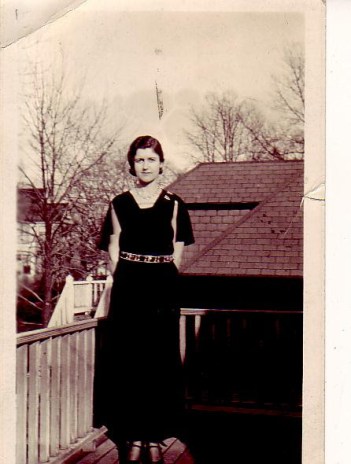 Days were spent teaching school, evenings writing lessons and grading papers. On weekends there were lectures, plays, card games and dances. Her diary shows that she was never at a loss for activities. One of Mom’s roommates set her up with my dad (a local businessman who had a car) for a double date. The roommate had her eye on Dad and figured that since my mom was taking care of her parents, she was a safe bet. In 1934 after a long delay in their plans caused by the onset of the Great Depression Mom and Dad were married. My sister was born in 1939 and by the time I came around Mom was 44 and Dad was 51. Theirs was a true love story! I can remember at age 16 walking with Mom and Dad along the strip in Las Vegas observing that in their middle 60’s they were holding hands as they strolled.
In retrospect I think it was Mom’s independent thinking that made the greatest impression on me. My sister and I were taught to act on our beliefs regardless of what others said. Mom reminded us that there might be consequences for our actions and only we could decide if the risk was worth it. This was particularly useful advice when during the first five years of my teaching career we went on strike nearly every year. I chose every time to strike, but understood that I could be jailed or even scarier, I could be fired!
Travel was viewed as an integral part of education. Travel meant roadtrips. In January 1948 when I was less than a year old, my dad sold his business, bought a travel trailer and a new car to pull it and we headed out to see the American West on what Mom and Dad described as “being gypsies” for 6 months. Imagine in 1948, with a 10 month old baby and a seven year old, living for half a year in a 14 foot camper! We first headed south to New Orleans for the Mardi Gras, and promptly got stuck in Tennessee for a few days because of a snowstorm. From New Orleans we headed west stopping to see historical sights along the way. In Austin my dad was thoroughly offended when while holding me in the rotunda of the state capitol waiting for my mom and sister who were hiking to the top, a tall Texan remarked to him, “Bet Grandpa is pretty proud of her.” It wouldn’t be the last time people thought he was my grandfather. And while he learned to laugh about it later, he didn’t find it very funny at the time.
We traveled on to Arizona stopping at the Grand Canyon and then on to Tucson to visit my mother’s older brother, and there my mother baked a birthday cake in the trailer oven. Then to LA to visit my Dad’ sister, and then up the west coast to Oregon and Washington. When we drove up Mt Hood the snow was so deep Dad had to follow the snow poles marking the edge of the road. At Timberlake Lodge, there were Saint Bernards to guide us into the lodge. These were the days before campgrounds so we stayed in residential trailer parks and my parents and my sister made lots of friends along the way. People of different colors and different beliefs. In Spokane, Washington, my parents were offered more for the trailer than they had originally paid so Mom and Dad packed up boxes, mailed them back home, packed the rest in the car and off we went staying in motels and cabins the rest of the way back to Indiana.
Throughout the years I was growing up we continued to travel, never as extensively as that first trailer trip, but usually for a month to six weeks every few years and the purpose was always to see new things. Sometimes it meant retracing steps from the trailer trip, given that I had been too little to remember any of it.

Other times it included new sights: attend a concert by The Morman Tabernacle Choir, swim in the Great Salt Lake, explore Rocky Mountain National Park and the maritime provinces of Canada, as well as visiting the undeveloped Gaspe Peninsula of Quebec. When my sister left home and lived first in Virginia, then in Berkeley, California, then the Northwest, these all became travel destinations. I learned so much on those trips: history, geography, and map reading skills in addition to what mattered most to my parents.
My parents were stricter than most of my friends’ parents. In retrospect I realize they were strict about specific things like curfews and dating. Because they had come of age in a different time, they had a hard time with me calling boys. Or with long telephone calls. Or dating in general, particularly in cars. But in many ways I think they were probably a lot more liberal than many parents of the 1960s. I could read whatever I wanted to, spend my time however I wished. I loved cooking and would often come home from the library with a new cookbook. From the time I was eight or nine, Mom would let me have total control over the kitchen as long as I left it clean. (She never wanted to be greeted by a messy kitchen in the morning.) Most of the time she’d be in the living room if I had a question. Often I would beat Mom home after school, and I’d scrounge around in the kitchen to see what was in the fridge. Then I’d look in a cookbook until I could come up with a recipe utilizing what we had on hand. When Mom would get home, I’d tell her what was for dinner. That always seemed to please her.
My mother and father were both voracious readers and I remember once being told by an overly pedantic librarian that I couldn’t check out a book because it was “too mature” for me. When I shared the story with Mom she immediately got in the car, drove to the library and marched in explaining in no uncertain terms, that it was NOT the librarian’s responsibility to determine what I could and could not read. Any time I wanted to check out a book I was to be allowed to do so. Mom knew it was important for me to read widely without censorship in order to make up my own mind about what I believed.
Civic responsibility was a given. It was important to know what was going on in the world around us. I don’t remember ever being sheltered because something was too scary. Every night we’d watch the NBC, CBS and ABC news. I remember watching news reels most specifically of the conflict in Korea and the McCarthy Hearings and the threats of the Cold War. (In those days John Daley was on ABC for 15 minutes at 6:15, followed by Douglas Edwards on CBS, and then finally John Cameron Swazey on NBC. Later Chet Huntley and David Brinkley entered the picture.) In 1964 I had read a lot about Barry Goldwater and volunteered for the Young Republicans. This was quite a shock in a home as left of center as mine was. When my father objected, my mother quickly stepped in and told him I should be able to work for whomever I wished. If he wanted to hand out materials on the opposite street corner he could do that but he should not silence my voice. Dad acquiesced. I always had the feeling that Mom made most of the daily decisions for the family. But when Dad said, “Jump!” My mother would respond, “How high?”
Perhaps all of mom’s philosophical ideals had at their center that we only had one chance at life. Don’t get bogged down with the mundane! There wasn’t anything we couldn’t achieve IF we were willing to work hard and tackle the obstacles we were sure to encounter. Time, not money, she believed, is the most important gift we have so it’s important that we are always mindful of the way we choose to spend it living every hour, every day to its fullest. Mom and Dad gave 100% to everything they did. Mom was extremely well organized but with enough flexibility to be spontaneous!
In my memory our house was almost always a relaxed place to be. Dad got home at 5 and we all sat down to dinner shortly thereafter. Conversations were focused on what we’d all done during the day, or what we’d read or current events. Sunday dinners were in the middle of the afternoon and Dad would go pick up a good family friend who would join us. For entertainment, sometimes friends would come over, or we’d play cards (canasta early on, bridge as I got older) or board games like Uncle Wiggley, Parcheesi or Scrabble. And there were a few television shows like Ed Sullivan’s Toast of the Town, or I Love Lucy or The Red Skelton Show. Sometimes, we’d go for a ride or I’d play the piano and my dad and I would sing (not well!). We didn’t have relatives in town so at holiday time, friends who either had no kids, or their kids were grown and far away, would join us for special dinners. Sure there were disagreements and arguments but they never lasted very long. Mom demonstrated what was important to her by modeling it every day!
What a lucky kid I was! I love you, Mom! Happy Mothers Day!


 We were impressed the way locals immediately cordoned him off with tape and signs that reminded tourists to give him space. This must a familiar happening given the speed and efficiency with which they reacted.
  I had read online that it’s important to book tickets far in advance for the launch that transports tourists to the Arizona Memorial. But by the time I read that, there were none available. The site did say that I could check each morning for the following day. Fortunately, on one of our first days on the island, I tried that and we had several choices for the next day.


 As we approached the northern coast, the guide showed us where parts of Jurassic Park were filmed. This part of the island is so much different than the populated south.


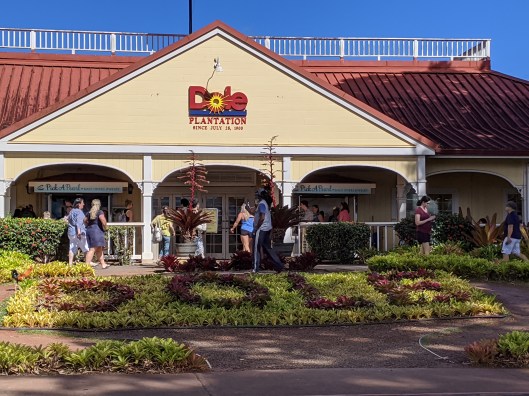 We knew this was going to be touristy but we had to stop. Pineapple was definitely the theme. Trinkets, souvenirs of all kinds, candies and every sort of ice cream treat we could want! We opted for cones. Wow! They were huge and wonderful!


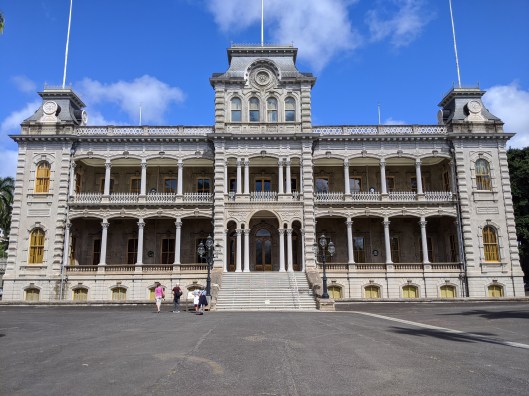 The palace was the home of King Kamehameha III through the time of Queen Liliuokalani. It was an incredibly modern home for the time having both electricity and also a telephone before the White House. Queen Liliuokalani was a phenomenal leader who looked out for all of her people including ensuring those with Hansen’s disease (leprosy) were well cared for on Molokai. She was also an optimist, believing up to the time of the overthrow, that the United States would do what was right. And while President Cleveland did support the monarchy, Congress did not. On August 12 1898, troops from the USS Philadelphia came ashore and overthrew the Hawaiian Monarchy. Queen Liliuokalani was imprisoned for 9 months in her upstairs bedroom.


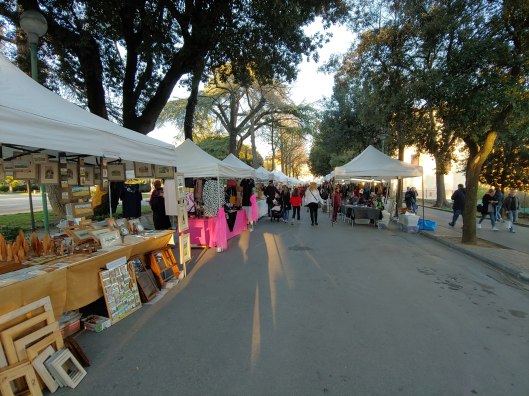
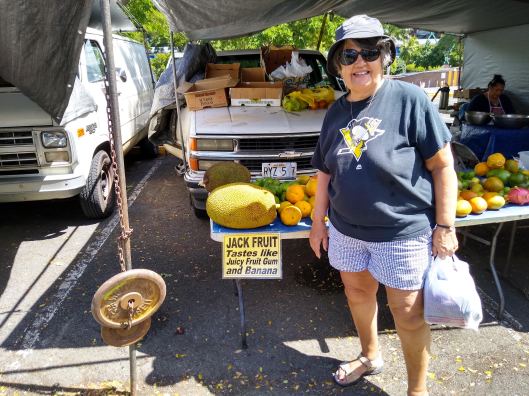 Food including fresh fruits, nuts and jams to tee shirts, purses, keychains, you name it, they have it. But again because we travel full time we don’t have the room to purchase much. So after wandering down the aisles making sure we didn’t miss anything and purchasing a few gifts, we were ready to move on.


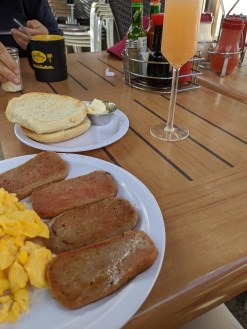 On one of our first days on Oahu, Bob I walked to a nifty breakfast place about a 5 minutes from our condo, and I decided to give it a try. Don’t think I’d want it on a regular basis but it wasn’t bad especially because along with the SPAM and eggs, I was served a Hawaiian mimosa made with POG juice. Pog stands for passion, orange and guava juices. Could definitely make that a regular addition to my diet!
  It had everything…a live band, outside seating with a view of the sunset, and a fabulous menu with lots of seafood! And to make things better, we walked in during happy hour! I swear Bob’s drink, The Monkey, looked more like a milkshake than an alcoholic libation! If ever in Honolulu, you definitely have to give it a try!


 It’s hard to believe we had just arrived in the epicenter of the virus. The rest of the week was pretty much a blur. We remained cautious but our biggest question was whether we would be able to fly out of Seattle on March 9 and head to DC. And then on to Majorca. Maybe we should just stay in Seattle for the rest of the month. We finally decided we’d wait and see how my cold progressed. I obviously couldn’t get on an airplane if I were ill. By the time my cold subsided, homes for the elderly had closed their doors. Definitely a good thing but also frustrating to be so close to Ruth and not be able to visit. Given her current state of dementia, visiting by phone or computer was not an option. Ever the list maker I wrote down everything we needed to do for our own travels and made a separate list of things I needed to do for Ruth. Anything that required leaving the house was on yet a different list and we tried to tackle those things in one outing. Luckily the weather wasn’t as rainy as it had been in January and flowers were beginning to pop up as well.


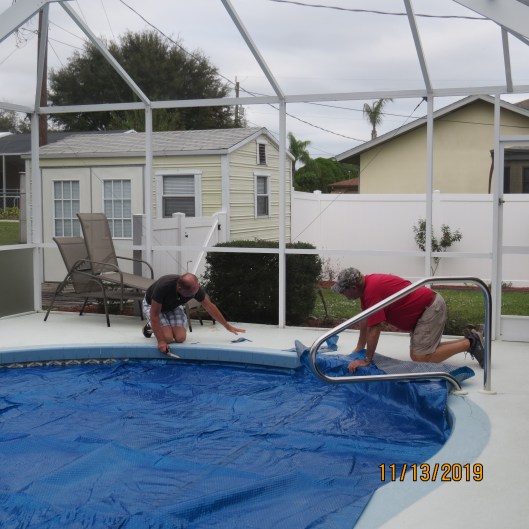 They take good care of us always checking in to see if we need anything, installing a new pool cover to make sure it stays nice and warm. They even invited us to have Thanksgiving dinner with them.


 I wasn’t sure how engaged our four year old grandson would be but I needn’t have worried! He was captivated the whole time!
  Afterwards we all went out for lunch! How wonderful it was for most of our family to be together. And Christmas Day was just as special as we had hoped! Presents, games, great food, lots of laughter! The day after Christmas Patrick, Cary, Bob and I headed for Ft Myers Beach. And the others headed to New York to visit with their other side of the family.


 For New Years Eve we found a great restaurant online that mentioned music and quickly made reservations! About 10 pm following a leisurely dinner we inquired of our waitress what time the music started. We were shocked when she said they were just getting ready to close. This was New Years, what was she talking about? We also knew that the bridge going onto the island where we were staying was going to close for two hours at a certain point. So we quickly called an Uber and went back to Ft Myers Beach. We wandered around the downtown and then found a bar, surprisingly not crowded, with lots of outside seating. We ordered drinks, got out our ubiquitous playing cards and began our euchre game. At midnight the fireworks began and we had front row seats. Such a lucky break! And when it was all over, we were walking distance back to our house.

 Then the following morning we started the drive back. This was now the fourth time on these roads. It’s fair to say we knew them pretty well.








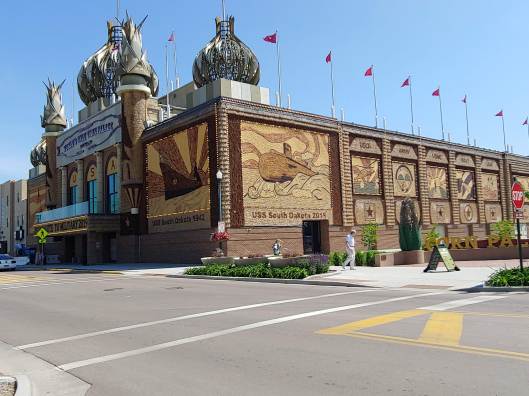 The Corn Palace was built in 1892. Now more than half a million tourists visit it every year. The thing that strikes us as the most amazing is that it’s redecorated with a different theme every year. Because we had been through it twice before we didn’t feel compelled to tour again but we did have to stop and snap a few shots of the outside.


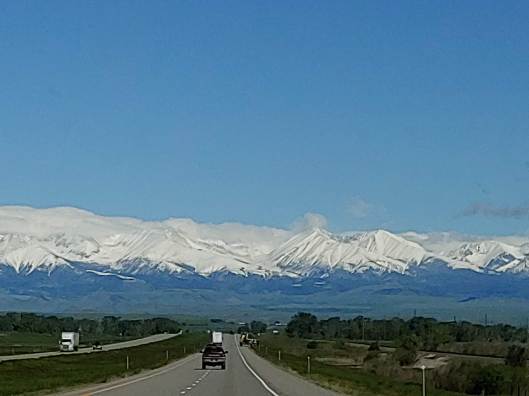
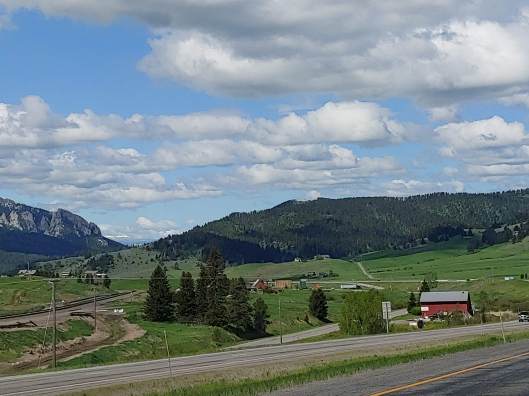 I90 brought us into Seattle through the Cascade Range crossing over Snoqualmie Pass. Even merging into Seattle’s infamous traffic couldn’t diminish the beauty!
 The owners lived upstairs which we always find is a plus. The host greeted us and proceeded to show us the details of the suite, as she called it. As she was about to leave, she asked us to let her know when we needed to dispose of our garbage. It seems that there are a lot of bears who visit the area. I suppose it would be more correct to explain that this is a new subdivision that was built in an area where a lot of bears made their home. So the bears take advantage of the new food sources. She told us how smart they are, how they maneuver locks on sheds, shake car handles to gain entry. There was even a brochure in the apartment, published by the town of Coquitlam, entitled, “Bear Aware!”


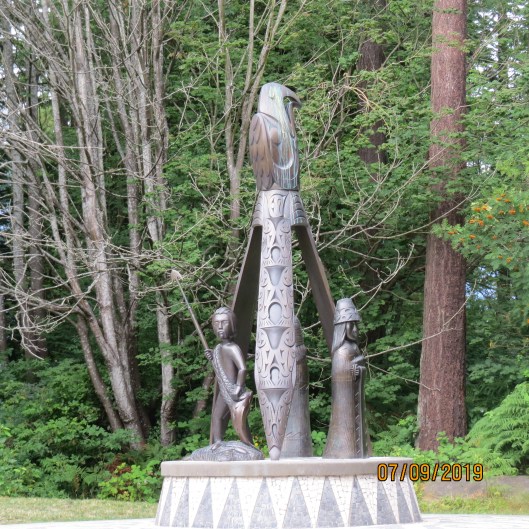 He was born in Portugal, and then lived in what is now Stanley Park where he was a whaler, fisherman and saloon keeper. The statue, the newest sculpture in the park, marks the connection of Europe and First Nation peoples. It was created by Portugal Joe’s great grandson, Luke Marston.


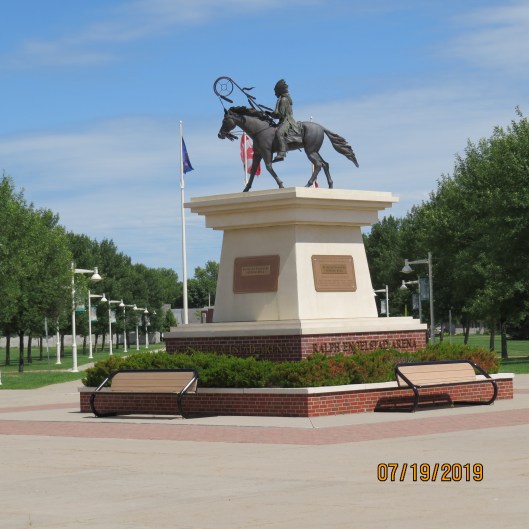 It appeared to be closed when we got there, but a woman in the pro shop said of course she could give us a brief tour. What a sight to behold!

 As we waited for her plane, we were a bit taken aback by the armed guards we saw in the airport. I know they’re supposed to make me feel more secure but…

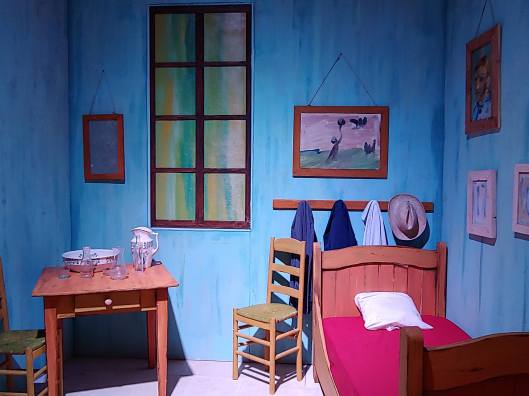
 The exhibit didn’t disappoint. It was very much like the one we previously viewed but this one was absolutely huge. Between the Van Gogh loops, we watched a short program entitled “”Dreamed Japan, Images of the Floating World” based on Japanese prints of the late 1800’s and featuring the art of Kasushika Hokusai’s,
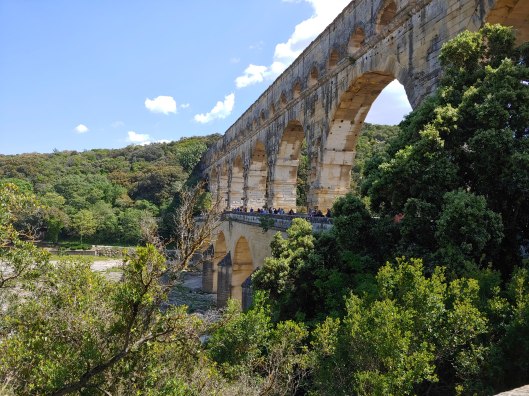 We were looking at an ancient Roman aquaduct, built in the first century! It’s three levels high, built from huge stones, cut so accurately that no mortar was needed in the construction. Rita and I decided we had to walk across. And although it was a chilly sunny day, I can’t begin to describe how windy it was. I had the distinct impression that had I been carrying an umbrella I would have been picked up in Mary Poppins style. My reading glasses were literally blown off my head!


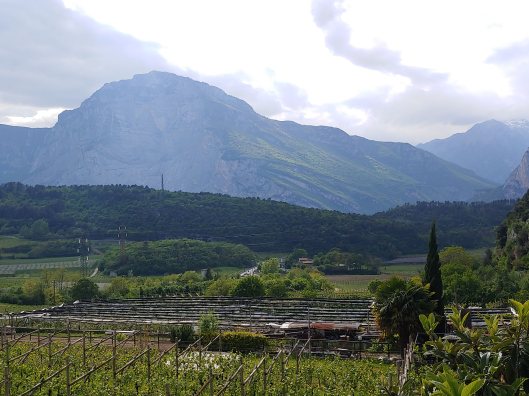 When Rita had booked an Airbnb for us for 3 nights she had mentioned that she wanted to see the area where her relatives had lived and check out the cemeteries. When our host, Giada, greeted us she showed us the lovely apartment with gorgeous views of the mountains.
  She mentioned that there is a woman in the village, Titsiana, who carries the geneology of the families in the area in her head. Would Rita like to meet her? She would arrange it for the next morning. This was far more than Rita had hoped for.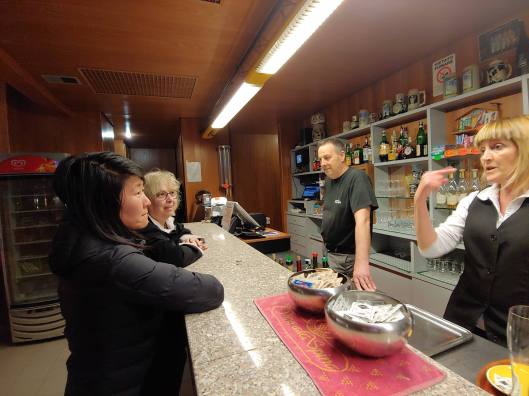
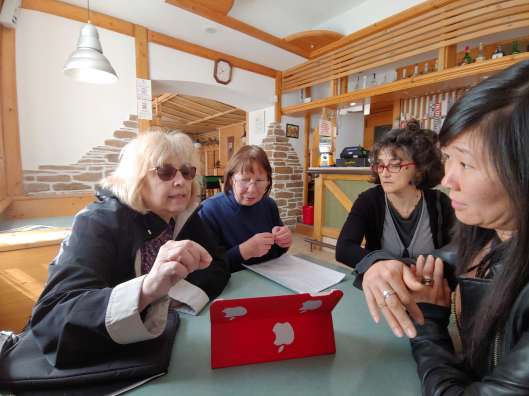 She talked about those who had left for South America and who had left for the United States. So many folks left and no one had any idea what had happened to them. And Cary continued, hour after hour, to translate nonstop. When we left the coffee shop, the ladies asked if we’d like to see the women’s museum. It was a block away and featured the work of the area women during World War II.


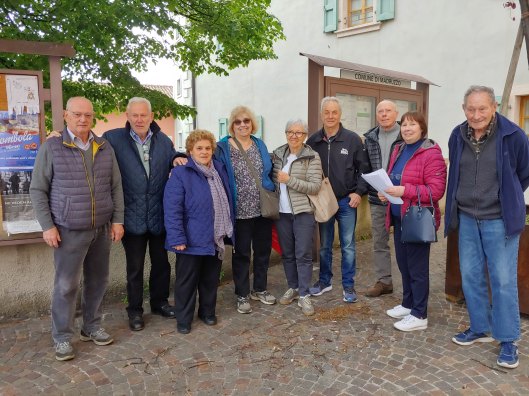 It still puts chills through me when I think of it. Cary, ever in gear, continued moving with Rita from one person to the next helping Rita understand who these people were. They then invited us into their town hall and the conversations continued.


 It’s hard for me to imagine going to a graveyard and then returning years later and it’s different. But in any case there were many with familiar names that Rita recognized from her research although I’m sure it will take quite a while to put it all in order.
 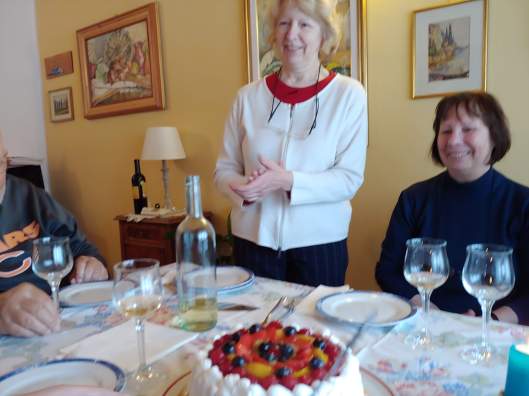 Cary continued to translate. Then we were invited to another cousin’s home. Here more wine was served! And the conversations continued. Finally, about 6 pm, nearly 9 hours after we first had gathered, we said goodbye already anticipating the next time they might see each other.





 Wow! Paul Cezanne was born, educated and died in Aux. He even went to law school here. But decided early on that art, not law, was his chosen profession. We tried to get to his studio and even the cemetery where he is buried but because of road construction and detours we were unable to get to either. We decided to move on to Avignon.
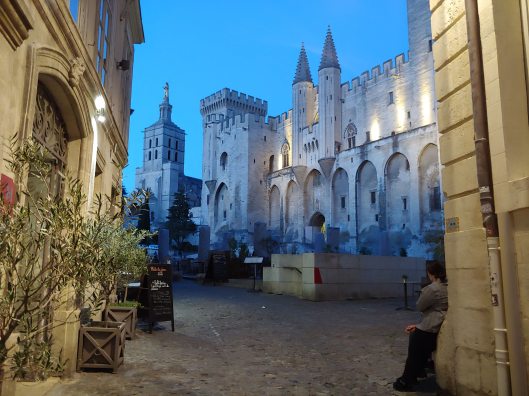 This was the home for Popes in 1305 when Pope Clement V became concerned for his safety in Rome. He was a guest of the Dominican Monastery. Seven Popes resided there until 1377 when the center of Catholicism returned to Rome but the palace remained under papal control for more than 350 years after that.
 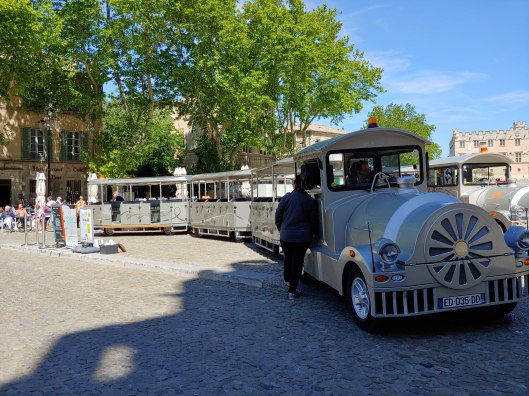 At one point in a busy downtown area we came to a dead stop. The driver told us to just wait patiently as she left and talked to some locals next to the road. It seemed there was a car blocking the street. Several men on the side of the road, picked up the car, moved it aside and we were again on our way! Wow! Talk about resourcefulness!


 In France, the bakery items were like something out of a magazine. The drive over the mountains was lovely and we truly enjoyed the 6 hour trek back to Rome.





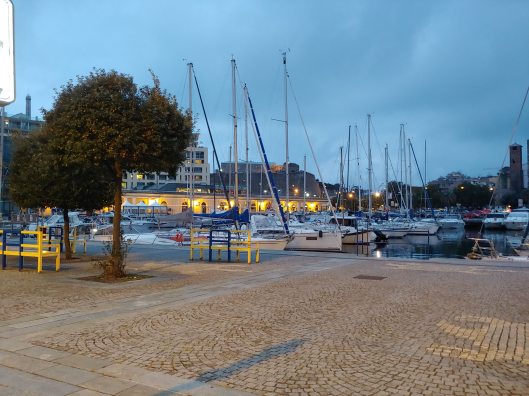
 The next morning we crossed into France following the coast lined with more tunnels than we could count. Bob has the habit of calling out“Tunnnnneeeellll” in the same manner as a soccer coach announces a “Gooaalll!” but when he began to lose his voice because of the limitless number of tunnels, he gave it up! It’s only a couple hours drive from Savona to Antibes. We are staying in the old city which is closed off to cars. Our host had directed us to a parking garage close to our apartment. He had also arranged for a friend to meet us at the apartment who graciously helped us lug our suitcases up to the second floor. (Americans, read that as third!) It’s a pretty spartan, well-worn abode, with a few details left out of the Airbnb description, but the location is perfect. And there’s a cute little restaurant just below us that’s a great stop for a cappucinno!
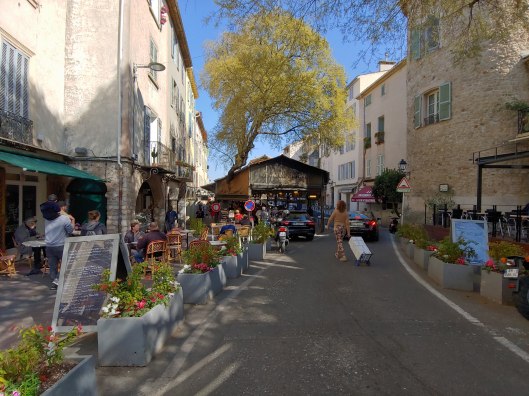 In many ways they’re all very similar but we never tire of the fresh vegetables, spices, cheeses and fresh flowers.

 It’s easy to get turned around in the windy old streets of Antibes and we found ourselves at the Ramparts just along the water after we left the market. The backdrop of the snow-capped mountains in the distance against the blue water with the multimillion dollar yachts in the foreground was like something out of a movie.


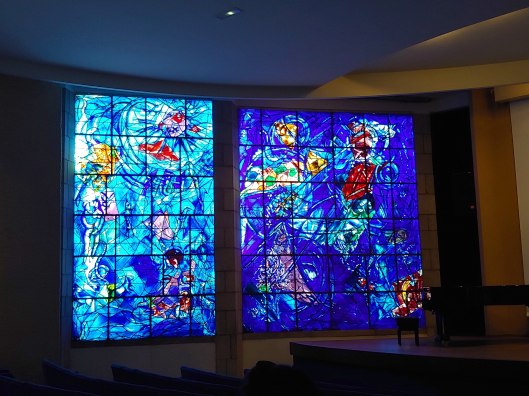 We learned early on in our travels to take advantage of audio guides in an art museum whenever they are available. They were particularly helpful here as Chagall’s work is highly religious and without the additional explanation I would have found it very difficult to understand.


 Another advantage of being right on the sea is the seafood! I particularly like the mussels. And wow! The portions are huge! Sitting at a table in a busy square just makes everything taste better!
 Public transport here is great and easy to figure out. In Nice, in addition to the bus system, there’s an efficient tram that gets you to many of the more popular destinations within the city. But as we boarded it to return to the train station, a voice over the speaker told us that this tram was not going further and everyone should get off. It made no sense. No one around us spoke English. Finally a gentleman explained that there was some sort of strike. Ok, it was about 2 kilometers back to the main station and it would be easy to find our way; we could just follow the tram tracks. Not far after we set out, we began to hear singing. Then we figured it out! This was a yellow vest protest; the marchers are protesting throughout France the inequity of wages. We were fascinated as we watched the paraders chant, sing, and throw an effigy of French President Macron up in the air. It was all very peaceful and we never felt anything but safe.
 Francesco, our landlord, told us about a car park a short walk from the Airbnb and it truly was easy. We had leased the car for the entire 3 months we were in Europe and we enjoy being able to go exploring whenever we wish. On the other hand, we also like exploring places on foot without having to worry about crazy drivers or finding a place to park.




 We had two favorite squares in Lecce: one is the The Piazza del Duomo, which houses the Baroque Cathedral whose chimes we enjoyed throughout our stay and I featured in my last blog. The second is the Piazza Sant’Oronzo named for the patron saint of Lecce who legend says protected the city from the plague in the 1700’s. In fact in the square stands a column that once stood at the end of the Appian Way in Brindisi where its twin still stands. There are two very different stories about the column. One says that it was the gift of the people of Brindisi thanking Sant Oronzo for protecting them from the plague. The other says that the column lay in ruins for several centuries before the people of Lecce restored it. Hmmm…I think I like the first better. In any event, this column too was being refurbished so it was hidden behind a covering!


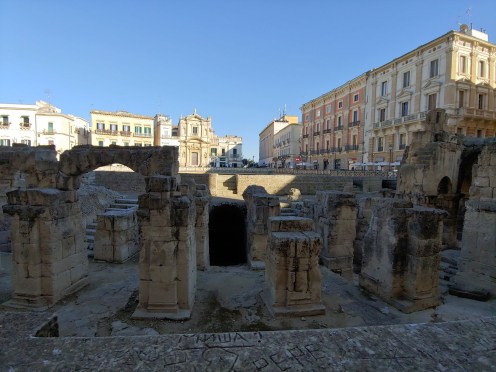
 which was just right around the corner.

 It belongs to the same family as mustard and cabbage. And it’s so very pretty…bright yellow as far as the eye can see. We also passed herds of goats and old stone buildings among the olive groves. The buildings, we learned, allowed in days past, for the farmers to live in their fields during their busiest times of year.
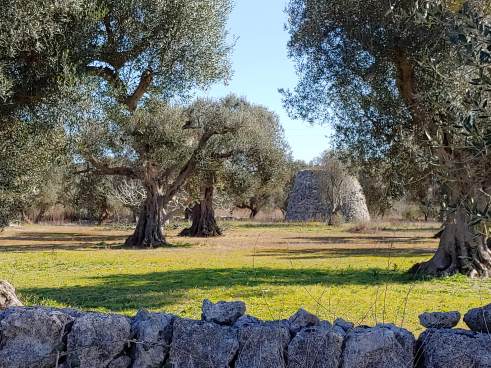 The Adriatic is as blue as the Caribbean and the views as we drove along the coast were stunning. Around every bend the view seemed to be better than the last. At one point we could look across the sea and see just the faintest hint of the mountains of Albania. We had read that in the summer the coast is so congested you can walk faster than cars move. So we felt really lucky to be there in March.


 Yay! I asked him if he spoke English. No. He asked me if I spoke French. No. I asked him if he spoke Spanish. No. We both laughed and he indicated I should follow him inside. I did. We made a lot of hand gestures; we wrote numbers on paper. He showed me how much we owed which matched the reservation online. We even got to the point where he gave me directions to a pizza place. Unbelievable how much you can communicate without speaking the same language. We walked down to the room; pretty spartan. No table to play cards; no side chairs; only the overhead light. But overall an ok place: clean with a great view; reasonable price. Unfortunately, even though he turned the heater on for us, we froze. I don’t think the temperature ever got above
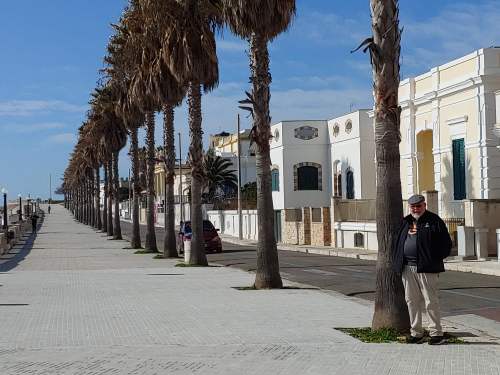 We then headed on to Gallipoli. This is not the Gallipoli of World War I; that one is in Turkey. Instead this city was described as a pretty fishing village. When I hear fishing village I keep thinking of the coast of Nova Scotia. Gallipoli turned out to be a city of more than 30,000. Today it’s divided into two cities: one old and one modern.


 Bob and Jane's Excellent Adventure